.jpg)
2026 Spring Allotrope® Connect Workshop
Companies and organizations registered to attend:
2026 Spring Allotrope Connect Workshop Hosted by
Please join us in shaping the future!
We’re excited to announce that registration for the 2026 Spring Allotrope Connect Workshop is now open. By popular demand, the Allotrope Connect Workshop is returning to Europe this spring, hosted by Johnson & Johnson in Leiden, Netherlands on May 5–7, 2026.
We invite industry and not-for-profit experts in lab informatics, digital transformation, regulatory science, technology, and manufacturing to collaborate on finding solutions for today’s pressing lab and manufacturing challenges. This year’s program will continue our tradition of hands‑on collaboration, technical deep dives, and community‑driven innovation across the Allotrope ecosystem.
Creating AI-Ready Laboratories
It is widely accepted that routine use of data standards will drive the creation of high-quality, connected, and contextualized datasets, and that these better datasets will enable more robust AI insights. However, for standardized data to fuel the realization of the vision of AI-ready laboratories, implementations of standardized data at scale must be accelerated, and data quality must be certified to build the necessary levels of trust. In the workshop, we will explore how the convergence of Data Standards and AI are mutual accelerators and enablers that may provide a viable path to a future state that can be executed NOW!
Registration:
Registration is open for in-person and virtual participation:
Registration is closed
Public Call for Abstracts: Creating AI-Ready Laboratories
Submission information is available on LinkedIn: Link
Dates:
May 5-7, 2026
Workshop & Reception Location:
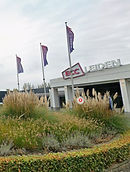
ECC Leiden
Haagse Schouwweg 10
2332 KG Leiden
Google Map
Board of Directors Location:
J&J Leiden
Archimedesweg 6
2333 CN Leiden
Google Map
Cost:
$100
Eligibility to Attend:
With the exception of the Board meeting on May 7, all events are open to the public regardless of membership in Allotrope Foundation
Recordings:
Recordings of several presentations will be available on a dedicated playlist of the Allotrope YouTube Channel
Workshop Agenda:
Day 1 – Tuesday, May 5 (CET time)
-
08:00-09:00 Breakfast and Registration
-
09:00-09:30 Welcome to Allotrope: Framework, and Roadmap
(Vinny Antonucci & Allotrope Product Team)
-
09:30-10:00 Keynote Speaker - AI in Pharma: Opportunities, Challenges, and Learnings
(Selma Pereira Lopes, J&J)
-
10:00-10:30 Presentation - From OpenLab to ASM: A Set‑and‑Forget Approach to AI‑Ready Data
(Heiko Fessenmayr & Joachim De Schrijver, Agilent Technologies)
-
10:30-11:00 Networking Break
-
11:00-12:00 Presentation – From Instruments to Intelligence: Scaling ASM Across the Lab Enterprise
(Wolfgang Colsman, ZONTAL; Chris Siegler & Vinny Antonucci, MSD)
-
12:00-12:30 Update - ASM Technical Guides & ASM Certification Program
(Ben Woolford-Lim, Allotrope Product Team)
view slides, watch on YouTube
-
12:30-01:15 Lunch
-
01:15-02:00 Presentation - AI in Data Standard Research at NIST
(Milos Drobnjakovic, OAGi; Boonserm Kulvatunyou, Hyunwoong Ko, Perawit Chareonwut,
Hakju Oh, NIST)
-
02:00-02:30 Presentation – Introducing CogniFlow: A Framework for Automated Analytical Data Processing and Monitoring Pipelines, with LADS OPC UA and ASM as a Practical Interoperability Use Case
(Ricardo Cunha, IUTA)
-
02:30-03:00 Presentation – ICAD: The Operational Complement to FAIR
(Wolfgang Colsman, ZONTAL)
view slides, watch on YouTube
-
03:00-03:15 Discussion/Lighting Talk: Proposal for a NextGen Allotrope long-term storage container
(Heiko Fessenmayr, Agilent Technologies)
view slides, watch on YouTube
-
03:15-03:30 Networking Break
-
03:30-04:00 Presentation & Demo – Lab-in-the-Loop and Democratizing Data Standards with
Agentic AI Cloud Pipelines
(Brian Loyal, Lee Tessler, AWS)
-
04:00-04:30 Presentation – Maximizing AI leverage with reusable Skills and MCP servers
(Danielle Chou, Anthropic)
-
04:30-05:00 Discussion – How can we work pre-competitively to fully leverage AI to make ASMs better and faster, and how can ASMs accelerate advanced AI insights?
-
05:00-06:30 Reception – The Bar at ECC Leiden;
Haagse Schouwweg 10; 2332 KG Leiden
Day 2 – Wednesday, May 6 (CET time)
-
08:00-08:45 Breakfast
-
08:45-09:00 Day Two welcome & Day One recap
(Vinny Antonucci, Allotrope Chair)
-
09:00-09:30 Keynote Speaker
(J&J Leadership)
-
09:30-10:00 Presentation – Operational FAIRification: Building on Community Ontological Standards such as Allotrope Foundation Ontology
(Rajaram Kaliyaperumal, J&J)
-
10:00-10:30 Presentation – Pistoia Alliance Portfolio Overview and Deep Dive: The CMC Process Ontology
(Birthe Nielsen, Pistoia Alliance)
-
10:30-11:00 Networking Break
-
11:00-11:30 Presentation – OpenChrom Web
(Matthias Mailänder, Lablicate GmbH)
-
11:30-12:00 New Pistoia Alliance project: Digital Analytical Methods (with Allotrope)
(Birthe Nielsen, Pistoia Alliance; Vinny Antonucci, MSD)
-
12:00-12:30 Presentation – Connecting Standards for the Lab of the Future: Market Insight and Proof-of- Concept Projects
(Sean Ruane, The Centre for Process Innovation - CPI)
-
12:30-01:30 Lunch
-
01:30-02:00 Presentation – Silent Stewardship: Making FAIR Compliance Invisible with Agentic Workflows
(Alberto Miranda Bedate, Amsterdam University Medical Center)
-
02:00-02:30 Presentation – From Instrument to Insight: Building the Agentic FAIR Lab
(Jeff Morgan & Prerna Patil, Deloitte)
-
02:30-03:00 Presentation – Connected Domains model update – Q2 CR release
(Wes Schafer, Allotrope product team)
-
03:00-03:30 Networking Break
-
03:30-04:15 Group Discussion – How can you use the connected domains model as a blueprint for your data lake, data products, or software solutions to connect ASMs ? What can future data strategies and data architecture look like with the ability to make diverse and connected ASMs on demand that fuel AI engines ?
-
04:15-04:45 Confirm key actions from the workshop, wrap up and look ahead to 2026 Fall Allotrope Connect Workshop at USP
-
06:30-08:00 Board Dinner – Het Prentenkabinet;
Kloksteeg 25, 2311 SK Leiden
Day 3 – Thursday, May 7 (CET time)
-
09:00-05:00 Allotrope Foundation Board Meeting



Presentation Details:
Day 1 – May 5 (CET time)
-
09:30-10:00
Keynote Speaker - AI in Pharma: Opportunities, Challenges, and Learnings (Selma Pereira Lopes, Head of Drug Product Development for Viral and Non-Viral Vectors, J&J)
Selma serves as the Head of Drug Product Development for Viral and Non-Viral Vectors at JnJ. With a strong foundation in biochemistry, Selma earned her PhD and completed a post-doctoral fellowship in biomedicine at the University of Barcelona. She has contributed to basic research at the University of Oxford and A*STAR Singapore during her academic career. Over the past decade, Selma has garnered extensive experience in the pharmaceutical industry, holding various roles ranging from discovery to the development of complex preventive and therapeutic medicines. In recent years, she has focused on accelerating and enhancing the quality of scientific pharmaceutical work through the adoption of various digital tools.
-
10:00-10:30
From OpenLab to ASM: A Set‑and‑Forget Approach to AI‑Ready Data (Heiko Fessenmayr, Software R&D Lab Informatics System Architect and Joachim De Schrijver, Lab Connectivity Software Product Owner and Project Manager, Agilent Technologies)
As laboratories move toward AI‑ready data ecosystems, routinely producing high‑quality, standardized datasets remains a persistent challenge. While data standards such as the Allotrope Simplified Model (ASM) are widely recognized as essential, many organizations struggle to operationalize them directly from production systems like OpenLab CDS. As a result, data archived in OpenLab ECM environments—both ECM 3.6 and ECM XT—often remains locked in proprietary formats, limiting its immediate reuse for analytics and AI.
This presentation introduces a practical, set‑and‑forget approach for converting OpenLab CDS data archived in ECM 3.6 and ECM XT into ASM files using an automated export framework. The solution supports both automatic conversion of newly generated data and batch conversion of selected (historical) datasets. Generated ASM files are automatically delivered to customer‑defined destinations, including Amazon S3 or local file systems, enabling seamless integration with downstream AI, ML or analytics platforms without manual intervention.
Configuration and monitoring are handled through a simple, stand‑alone web user interface designed for operational use rather than custom development. The interface allows users to configure data sources, conversion scope, and output destinations once, and then continuously monitor conversion activity and status. Once set up, ASM generation becomes a background process embedded in routine laboratory operations, requiring no ongoing user involvement while ensuring a consistent, scalable flow of AI‑ready data.
Heiko Fessenmayr is a distinguished figure in the realm of analytical laboratory standards, focusing on the development of data formats and communication protocols. With over five years of dedicated service, he represents Agilent Technologies at the Allotrope Foundation, contributing significantly to the advancement of the ADF/ASM standard data format.
In addition to his foundational work, Heiko plays an instrumental role in enhancing analytical laboratory IoT communication standards through OPC-UA technologies. His leadership as chairman of the OPC-UA ASI/CAISI working group is pivotal in the standardized integration of analytical devices into comprehensive data systems.
Heiko’s expertise extends to the conceptualization of Lab Informatics solutions, particularly for chromatography data systems and analytical data content management systems. His comprehensive experience, spanning over two decades with HP/Agilent, encompasses software engineering, project and program management, technical marketing management, and, since 2015, his influential role as an R&D Lab Informatics System Architect.
Joachim De Schrijver holds an MSc in Bioengineering (2008) and a PhD in Bioinformatics (2012), both from Ghent University. He has been with Agilent Technologies since 2013, working in a variety of technical and leadership roles. For over five years, he worked as a bioinformatics and R&D scientist, focusing on the development of data analysis solutions and their integration with multiple instrument types in genomics and Next-Generation Sequencing (NGS) laboratories, automating end-to-end data workflows within the Multiplicom division. He later moved into a Product Owner role for a large commercial cloud-based genomics analysis platform (Alissa Reporter) and, since 2025, has been working as Product Owner and Project Manager on Allotrope-related products.
-
11:00-12:00
From Instruments to Intelligence: Scaling ASM Across the Lab Enterprise (Wolfgang Colsman, ZONTAL; Chris Siegler & Vinny Antonucci, MSD)
Despite widespread adoption of FAIR data principles, many laboratory organizations still struggle to answer fundamental scientific and operational questions in real time. The challenge is no longer data availability—it is transforming instrument data into decision-ready intelligence.
This presentation shares MSD’s journey implementing the Allotrope Simple Model (ASM) at enterprise scale across a heterogeneous, multi-modal instrument landscape. We highlight the realities of scaling ASM beyond chromatography, where structural variability, validation complexity, and SME dependency quickly break traditional project-based integration models.
We introduce a new architectural paradigm: integration factories. By treating instrument families as repeatable patterns and industrializing converter generation, validation, and onboarding, MSD and ZONTAL transformed integration from bespoke projects into scalable infrastructure. This shift reduced onboarding timelines from months to days, improved data quality through “correct-by-construction” validation and created reusable enterprise assets.
Building on this foundation, we connect ASM to the broader ICAD (Integrate, Contextualize, Analyze, Decide) framework, demonstrating how standardized, contextualized data with full lineage enables cross-instrument traceability, governed comparisons, and AI-ready decision-making.
The result is a transition from static data products and delayed insights to on-demand intelligence, where scientists can ask novel questions, trace results end-to-end, and receive answers in seconds rather than days.
Attendees will gain practical insights into:
· Scaling ASM across diverse instrument ecosystems
· Overcoming validation and variability challenges
· Designing and operationalizing integration factories
· Enabling lineage-driven, AI-native lab intelligence
This session outlines a clear path from FAIR data to real-time, enterprise-wide scientific decision-making.
-
01:15-02:00
AI in Data Standard Research at NIST (Milos Drobnjakovic, Chief Ontologist, OAGi; Boonserm Kulvatunyou, Perawit Chareonwut, Hakju Oh, Systems Integration Division at NIST)
Creating AI-ready laboratories requires not only data standards, but also ways to make machine learning (ML) metadata and related knowledge more connected, contextualized, and usable in practice. This presentation highlights two complementary efforts in that direction. First, we introduce the Machine Learning Lifecycle Ontology (MLLO) Working Group within the Industrial Ontologies Foundry (IOF). The group is developing a modular, framework-neutral ontology for representing artifacts, processes, datasets, algorithms, and quality metrics across the ML lifecycle. A key aspect of this work is that MLLO aims to support links between ML lifecycle metadata and domain-specific knowledge so that model development, deployment, reuse, and interpretation can be better grounded in the scientific or operational context in which an ML system is used. The group is also exploring agentic approaches for interacting with this ontology-grounded knowledge, including the Machine Learning Lifecycle Explorer (MLLE), where large language model (LLM)-based reasoning is combined with structured tools and ontology-grounded querying to enable more guided and context-aware interaction with ML knowledge. We then discuss ConnectCenter as a complementary effort that may be more directly related to accelerating standards development and implementation with AI. This includes prototyped Model Context Protocol (MCP) tools designed to help standards users interact with standards-related resources, models, and tools in a more controlled and effective way. Together, these efforts illustrate how standards, ontologies, and AI-enabled tooling can reinforce one another in the move toward AI-ready laboratories.
Milos Drobnjakovic is a bioinformatician, computational biologist, and ontologist working at the intersection of ontology engineering, AI, and biomanufacturing. His work spans the development of ontologies, knowledge graphs, machine learning solutions, and data-driven tools for interoperability, decision-making, and process improvement. He currently serves as Chief Ontologist on NIIMBL- and NIST-funded projects focused on ontologies for biopharma, bioindustry, and machine learning. He is also a co-chair of several Industrial Ontologies Foundry (IOF) working groups, including IOF Core, where he leads the development of semantic standards and ontology-based frameworks across multiple industrial domains.
Hyunwoong Ko, Ph.D., is an Assistant Professor in the School of Manufacturing Systems and Networks at Arizona State University. His research focuses on the intersection of data science, manufacturing, and design, with an emphasis on physics-informed and generative AI for digital twins in advanced manufacturing. His work develops machine-learning–driven methods to enhance prediction, control, and decision-making in complex systems, such as semiconductor manufacturing and robotics-enabled production. He is currently the Chair of the Machine Learning Lifecycle Ontology (MLLO) Working Group within the Industrial Ontologies Foundry (IOF).
Boonserm Kulvatunyou, Perawit Chareonwut, and Hakju Oh are researchers from the Systems Integration Division at NIST. They have been working with industries and standard development organizations on data and standards interoperability for over 20 years.
-
02:00-02:30
Introducing CogniFlow: A Framework for Automated Analytical Data Processing and Monitoring Pipelines, with LADS OPC UA and ASM as a Practical Interoperability Use Case (Ricardo Cunha, Researcher and Project Manager, IUTA)
CogniFlow is an open-source platform for reproducible, interoperable, and scalable analytical data processing, designed to offer a comprehensive toolset for robust, intelligent wastewater monitoring. The talk introduces the motivation behind CogniFlow and presents its layered platform design. At its core, contracts define how modules interact, analytical semantics specify the meaning of pipelines, steps, and value transformations, and concrete implementations realise these concepts in executable tools and services. This architecture aims to support explicit, FAIR-oriented, and auditable data processing rather than isolated and hard-to-reuse workflows. Within this framework, pipelines consist of processing steps described in an RDF/OWL-based semantic layer that reuses established terms and documents reusable processing vocabulary through SKOS. From a practical deployment perspective, the talk also demonstrates how LADS OPC UA and the Allotrope Simple Model (ASM) can support standardisation in real laboratory settings. LADS OPC UA enables vendor-independent retrieval of instrument data and metadata, while ASM provides a harmonised representation of analytical results and metadata. Together, they show how diverse analytical inputs can be transformed into shared, standardised pipeline inputs in CogniFlow, supporting transparent provenance, easier cross-laboratory comparison, and more practical adoption of automated monitoring workflows.
Ricardo Cunha holds an MSc in Bio and Chemical Engineering from the University of Minho in Portugal and a PhD in Environmental Engineering from Wageningen University in the Netherlands. He has been working as a project manager and research assistant at IUTA since June 1, 2019. Ricardo Cunha has an academic and professional background in environmental technology (e.g., design, operation, and maintenance of aerobic and anaerobic wastewater treatment technologies) with relevant interdisciplinary applications that have been implemented in various projects (e.g., (bio)crystallization of phosphorus in biological aggregates during anaerobic wastewater treatment, image analysis for the morphological characterization of aerobic flocculation sludge, development of analytical methods for the detection of trace pollutants in water samples using two-dimensional liquid chromatography and high-resolution mass spectrometry, and development of software for automated data processing routines.
-
02:30-03:00
ICAD: The Operational Complement to FAIR (Wolfgang Colsman, ZONTAL)
The FAIR data principles have become the global standard for scientific data stewardship, defining what high-quality data should be: findable, accessible, interoperable, and reusable. However, despite widespread adoption, most pharmaceutical organizations remain unable to generate cross-program insights using FAIR compliance alone, revealing a critical operational gap between data principles and actionable scientific outcomes .
This presentation introduces ICAD (Integrate, Contextualize, Analyze, Decide), an open, four-stage operational framework that transforms governed data into enterprise-scale decision intelligence. ICAD complements FAIR by defining how data must be operationalized: integrating instrument data at the point of generation, contextualizing it with machine-readable scientific meaning, enabling governed analytical workflows with full provenance, and ultimately driving AI-augmented, transparent decision-making.
We demonstrate how the Allotrope Simple Model (ASM) and Allotrope Foundation Ontologies (AFO) provide a practical implementation of ICAD’s Integration and Contextualization principles, enabling structured, queryable, and machine-actionable data pipelines across instruments, systems, and sites. This alignment establishes a clear pathway from data capture to cross-program analytical intelligence.
In an environment of increasing pipeline pressure and patent expirations, the ability to operationalize data—not merely govern it—has become a competitive necessity. ICAD offers a scalable, open specification for scientific data infrastructure, bridging the gap between FAIR compliance and real-world decision impact in pharma R&D.
-
03:00-03:15
Discussion/Lighting Talk: Proposal for a NextGen Allotrope long-term storage container (Heiko Fessenmayr, Software R&D Lab Informatics System Architect, Agilent Technologies)
While the pharmaceutical industry maintains a strong demand for a vendor-neutral, long-term archiving format, adoption of the current ADF has remained limited. To address this, we propose a next-generation container based on the Open Packaging Conventions (OPC) standard. This ISO-certified framework (ISO/IEC 29500:2008), utilized by Microsoft Office, leverages mature XML and ZIP technologies with a robust open-source API to ensure seamless content access and community-driven maintenance. By storing metadata as Allotrope Simple Model (ASM) files and utilizing Protocol Buffers (ProtoBuf) for high-performance binary data, such as chromatograms and spectra, the new format maximizes existing ASM specifications while maintaining the flexibility to embed original source files. This evolution minimizes implementation redundancy and offers a high-performance, scalable path toward sustainable data integrity and laboratory interoperability.
Heiko Fessenmayr is a distinguished figure in the realm of analytical laboratory standards, focusing on the development of data formats and communication protocols. With over five years of dedicated service, he represents Agilent Technologies at the Allotrope Foundation, contributing significantly to the advancement of the ADF/ASM standard data format.In addition to his foundational work, Heiko plays an instrumental role in enhancing analytical laboratory IoT communication standards through OPC-UA technologies. His leadership as chairman of the OPC-UA ASI/CAISI working group is pivotal in the standardized integration of analytical devices into comprehensive data systems.Heiko’s expertise extends to the conceptualization of Lab Informatics solutions, particularly for chromatography data systems and analytical data content management systems. His comprehensive experience, spanning over two decades with HP/Agilent, encompasses software engineering, project and program management, technical marketing management, and, since 2015, his influential role as an R&D Lab Informatics System Architect.
-
03:30-04:00
Lab-in-the-Loop and Democratizing Data Standards with Agentic AI Cloud Pipelines (Brian Loyal, Principal AI/ML Solutions Architect & Lee Tessler, Principal Technology Strategist, Healthcare & Life Sciences, AWS)
Scientific organizations often face slow, resource-intensive efforts to standardize instrument data and onboard laboratories into modern digital environments. This session explores how agentic AI can accelerate that process through automated code generation, iterative validation, and an expert-in-the-loop workflow. AWS demonstrates an approach that develops instrument data converters in minutes rather than weeks by combining agentic code generation with rapid testing cycles guided by domain expertise. AWS also developed a self-deployable cloud pipeline that enables enterprises to build and scale data conversion workflows within their own environments. To support broader adoption, AWS is making the sample code library available as open source.
Brian Loyal is a Principal AI/ML Solutions Architect in the Global Healthcare and Life Sciences team at Amazon Web Services. He has more than 20 years of experience in biotechnology and machine learning and is passionate about using AI to improve human health and well-being.
Lee Tessler is a Principal Technology Strategist for the Healthcare & Life Sciences industry at AWS. Lee has a PhD in Computational Biology and over 20 years of experience in the biotechnology industry. He is focused on developing new approaches to cloud and AI to make the world healthier, cleaner, and safer.
-
04:00-04:30
Maximizing AI leverage with reusable Skills and MCP servers (Danielle Chou, Applied AI @ Anthropic)
This session covers why investing in reusable Skills and MCP servers is one of the highest-leverage things a lab informatics organization can do right now. We'll walk through a concrete example: an Instrument-to-Allotrope Skill that auto-detects instrument types and produces ASM JSON, and how Claude handles the parsers, validation, and pipeline plumbing around it. We'll close on what this unlocks - the same agents you build to produce ASM data are what scientists use to query, analyze, and reason over it, so every investment in standards directly accelerates what's possible with AI.
Danielle Chou is an Applied AI Solutions Architect at Anthropic, where she partners with enterprise life sciences customers to design and deliver Claude-powered solutions. Before Anthropic, she spent four years as a Technical Solutions Architect at Benchling, where she led complex enterprise integrations and contributed to the open-source Allotropy project, building instrument adapters now used across the biotech industry. Earlier in her career she led teams at Zymergen and Proteus Digital Health. She holds a Master's in Translational Medicine from UC Berkeley/UCSF.
Day 2 – May 6 (CET time)
-
09:30-10:00
Operational FAIRification: Building on Community Ontological Standards such as Allotrope Foundation Ontology (Rajaram Kaliyaperumal, Lead Ontologist at Johnson & Johnson Innovative Medicine, J&J)
Within the Therapeutics Development and Supply (TDS) department at Johnson & Johnson (J&J), we are advancing data democratization by applying FAIRification practices to historical data in our data lake. This is done through the use of ontologies and a FAIR-by-design methodology, which enables ontology-driven data table structures within Electronic Laboratory Notebook (ELN) applications.
Our approach leverages community-developed ontologies, such as the Allotrope Foundation Ontology (AFO) and the Pistoia Alliance’s IDMP-O, complemented by custom extensions to address specific internal data requirements. In this presentation, we will demonstrate how we manage the integration and extension of various community ontologies within J&J using a layered ontology strategy. This approach ensures interoperability and adaptability to our organizational needs, and scales ontology development efforts by involving different stakeholders across the various layers of ontologies.
Rajaram Kaliyaperumal serves as the Lead Ontologist for the Therapeutics Development and Supply (TDS) department at Johnson & Johnson Innovative Medicine. In this role, he is responsible for developing and maintaining ontologies and controlled vocabularies to support TDS operations. He also leads initiatives to establish master data for products and compounds, utilizing community ontologies standards within TDS.
With extensive experience as a Semantic Web Engineer, Rajaram previously contributed to the rare diseases domain, where he played a key role in implementing FAIR data principles for rare disease data in various EU research projects.
-
10:00-10:30
Pistoia Alliance Portfolio Overview and Deep Dive: The CMC Process Ontology (Birthe Nielsen, Pistoia Alliance)
The Pharmaceutical CMC Process Ontology provides a standardized, machine-readable representation of CMC processes and their execution context. Its scope is explicitly process-centric and aligns with ISA-88 recipe structures. The ontology is intended to support interoperability, tech transfer, data integration, and advanced analytics by enabling structured exchange of recipe and process data across systems and sites.
Birthe Nielsen is a consultant with the Pistoia Alliance working on the development of industry-wide data standards, ontologies and open-source solutions to enhance automation, digital transformation and compliance in pharmaceutical research and manufacturing. Birthe has an academic background in pharmaceutical analysis and has published more than 40 peer-reviewed scientific papers. Birthe holds a MSc in Engineering (Biotechnology) from Aalborg University (Denmark), and a PhD in Pharmaceutical Sciences from Portsmouth University (UK).
-
11:00-11:30
OpenChrom Web (Matthias Mailänder, Software Developer, Lablicate GmbH)
OpenChrom Web builds upon the previously presented OpenChrom application and REST API. It can run process methods on a server and show the results visually in a browser window. The GC-MS chromatogram, deconvoluted peaks and database matching table results, which are displayed, have been submitted within the Allotrope working groups for standardization. Input data can be proprietary vendor data. It can also handle the Allotrope Data Format. The database search can be additionally matched against AI generated in-silico spectra. The web version is easily integrateable in LLMs, which can explain the result to the user who may not be a domain expert and has additional questions for the AI agent.
Matthias Mailänder is a food chemist who works as a software engineer at Lablicate GmbH in Hamburg working on OpenChrom a multi-vendor chromatography data system. He is a strong advocate of Open Source software and FAIR data.
-
11:30-12:00
New Pistoia Alliance project: Digital Analytical Methods - with Allotrope (Birthe Nielsen, Pistoia Alliance; Vinny Antonucci, MSD)
The Pistoia Alliance Digital Analytical Methods project, in collaboration with Allotrope, aims to modernize how analytical methods are defined and used. Current approaches rely on manual documentation, leading to errors and inconsistencies, particularly during method transfer. This initiative shifts to standardized, machine-readable method definitions that integrate directly with laboratory systems and link to results, improving data integrity, enabling automation, and simplifying interpretation and lifecycle management. Building on the Methods Hub project, it expands the scope to include materials, specifications, sample preparation, system suitability, and external references for a more complete digital method model.
Birthe Nielsen is a consultant with the Pistoia Alliance working on the development of industry-wide data standards, ontologies and open-source solutions to enhance automation, digital transformation and compliance in pharmaceutical research and manufacturing. Birthe has an academic background in pharmaceutical analysis and has published more than 40 peer-reviewed scientific papers. Birthe holds a MSc in Engineering (Biotechnology) from Aalborg University (Denmark), and a PhD in Pharmaceutical Sciences from Portsmouth University (UK).
-
12:00-12:30 Connecting Standards for the Lab of the Future: Market Insight and Proof-of-Concept Projects (Sean Ruane, Principal Data Scientist, The Centre for Process Innovation - CPI)
The Centre for Process Innovation’s Lab of the Future programme is a cross-industry consortium bringing together UK pharma companies, equipment and digital vendors, small enterprises, and research organisations. The programme is focused on simplifying lab digitalisation by connecting key standards into a full digital framework.
This talk will present market research carried out through the programme, including the value case for lab digitalisation, the main areas of impact, and what leading organisations are doing differently.
The talk will also provide a high-level overview of the ongoing Phase 1 proof-of-concept project, funded by Pfizer, and the planned Phase 2 proof of concept, which aims to develop a collaborative framework for AI-driven labs.
Sean Ruane is a Principal Data Scientist at the Centre for Process Innovation. Sean originally joined the pharmaceutical field as a downstream scientist and has experience in digital integration, process intensification, control, modelling, and designing experimental systems suitable for data science. He is an experienced technical leader, leading projects from novel development systems, to large-scale data science projects, to the design and implementation of CPI’s end-to-end continuous processing lab. Sean is the lead for CPI’s Lab of the Future program, which aims to work across multiple organisations to build a standardised, vendor-agnostic framework for lab digitalisation, aiming to make data FAIR, build simpler pathways to automation, and to make better, faster decisions in the lab and across the business.
-
01:30-02:00
Silent Stewardship: Making FAIR Compliance Invisible with Agentic Workflows (Alberto Miranda Bedate, Amsterdam University Medical Center)
Ensuring that biomedical data are Findable, Accessible, Interoperable, and Reusable (FAIR) is often hindered by fragmented workflows and the high overhead of manual curation. While agentic AI offers potential to automate the research lifecycle, its practical application in enforcing FAIR principles remains underdeveloped.
In this work, we present an agentic framework that embeds standard compliance directly into the experimental pipeline. Using flow cytometry as a primary use case, the system coordinates specialized agents to automate metadata capture and to promote alignment with community standards (e.g., MiFlowCyt) at the point of generation. By integrating these "silent" agents to handle schema mapping, we achieve rigorous stewardship while maintaining a human-in-the-loop for final validation. This approach minimizes researcher burden and provides a scalable, standards-based template for achieving FAIR compliance across diverse scientific domains.
-
02:00-02:30
From Instrument to Insight: Building the Agentic FAIR Lab (Jeff Morgan Managing director in Deloitte’s life sciences R&D & Prerna Patil, Deloitte)
This presentation discusses how to automate the instrument-to-insight lifecycle by making laboratory data more reusable, interoperable, and analysis-ready through agentic automation, ASM, and an instrument FAIR data fabric. Using agentic solution such as parser agents and agentic dataset assembly, we explore how connected data can help close the loop between wet-lab experimentation and dry-lab analytics to enable faster, AI-ready scientific workflows.
Jeff Morgan is a managing director in Deloitte’s life sciences R&D practice with more than 20 years of experience helping life sciences organizations modernize R&D through data, analytics, and AI
-
02:30-03:00
Connected Domains model update – Q2 CR release (Wes Schafer, Allotrope product team)
The Allotrope Product Team is advancing the ASM CR model for Connected Domains, establishing a foundational skeleton that will span across materials, instruments, results, equipment, methods, processes, and specifications. This model is being shaped to support key use cases such as reaction analysis and stability study data. To enable this, a set of interconnected ASM domain relationships, classes, and modular schemas such as Physical Characterization Methods, are being carefully evaluated, developed and aligned with supporting many new ontology terms. The latest updates to the model will be presented during the session. This effort may transition into an externally charter project.